Privacy and compliance should not be a trade-off
No holistic solution exists today that preserves user privacy in decentralised finance while still enabling effective regulatory oversight. This gap undermines trust on both sides and holds back the adoption of DeFi in Europe.

Users fear data exposure
Legitimate users are reluctant to share personal and financial data on transparent ledgers.

Regulators see opaque activity
Supervisors struggle to enforce AML and counter-terrorist financing rules in pseudonymous systems.

PETs4DeFi bridges the gap
Regulatory requirements are embedded into the technology from the outset, so privacy and compliance reinforce each other.
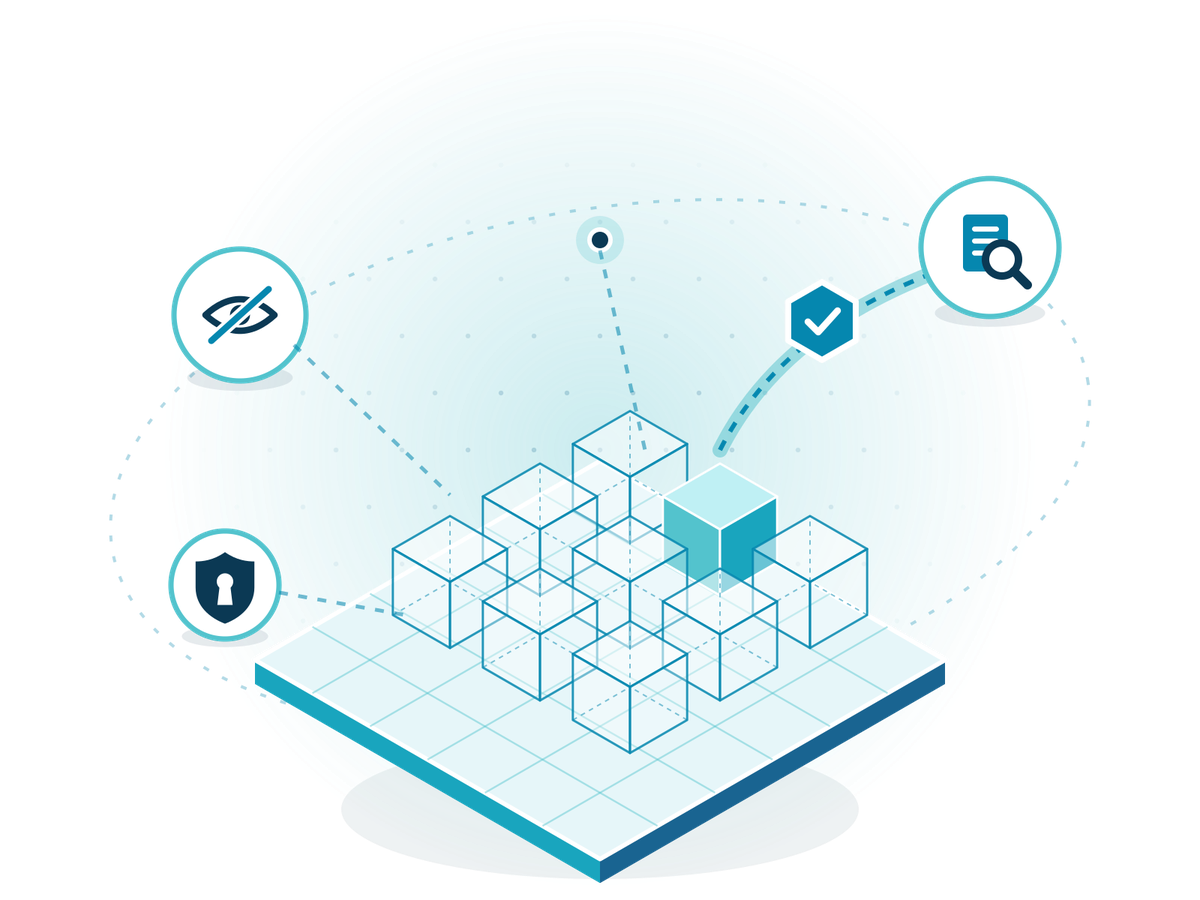
Selective transparency
Most data remains confidential on-chain, while proofs or selective disclosures are made available to authorised parties, such as regulators and auditors, only when warranted.
- Users control their own identity credentials, with no central identity store
- Regulators receive only the minimum information they need
- Built on a clearly defined threat model and sound cryptographic primitives
An iterative, stakeholder-driven methodology
PETs4DeFi combines blockchain engineering, privacy-enhancing technologies and legal and ethical safeguards in four repeating phases.
Design
Translate regulatory and user requirements into protocols and architecture.
Prototype
Build smart contracts, wallets, oracles and dashboards as working components.
Evaluate
Test security, performance and usability on testnets and with real users.
Refine
Improve each component based on results and stakeholder feedback.
 Continuous feedback loops with fintech SMEs, end users and legal experts
Five integrated components
At the heart of PETs4DeFi is an architecture in which five components work together to deliver privacy-preserving, compliant decentralised finance.
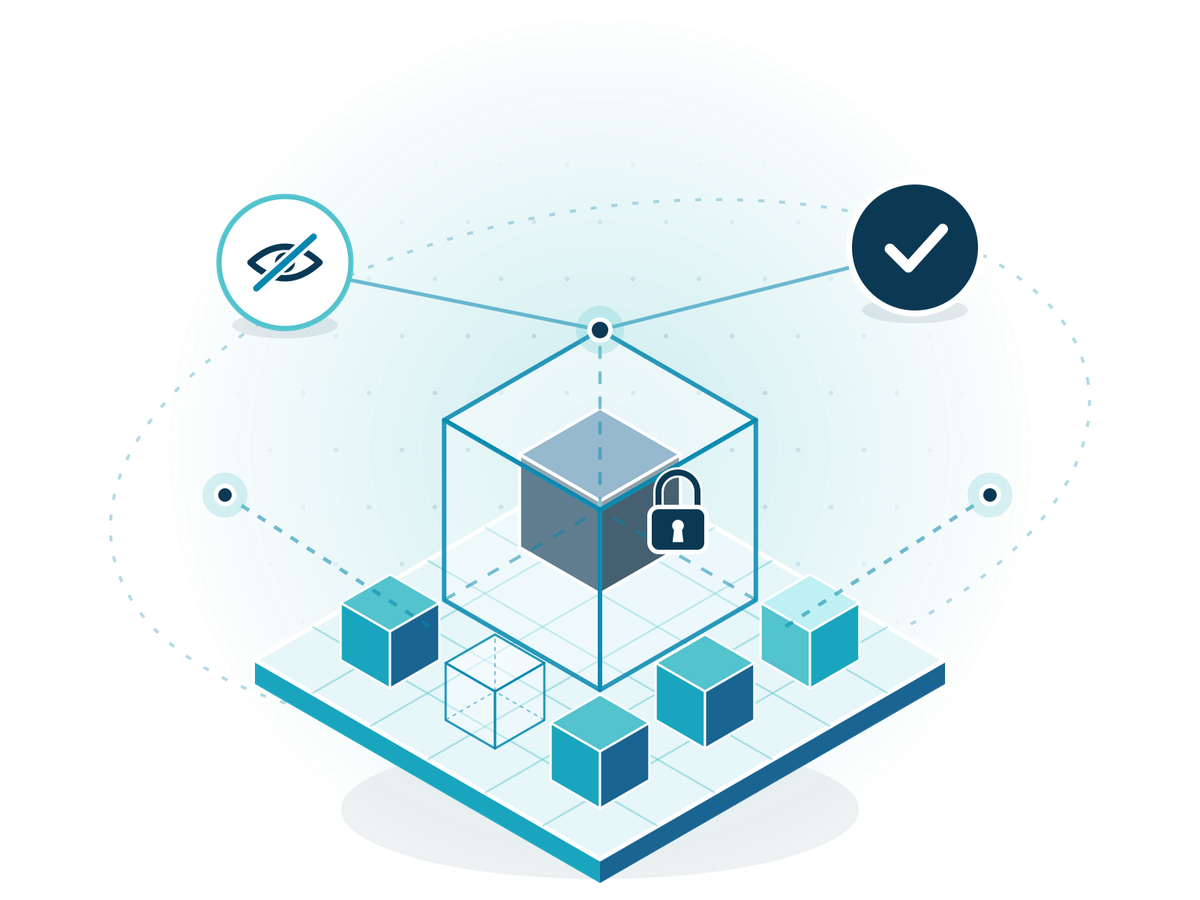
Privacy-by-design smart contracts
Smart contracts enforce compliance rules through cryptography instead of clear-text data. Critical actions, such as large transfers, require a zero-knowledge proof of compliance before they execute, turning contracts into transparent on-chain checkpoints that never see personal data.
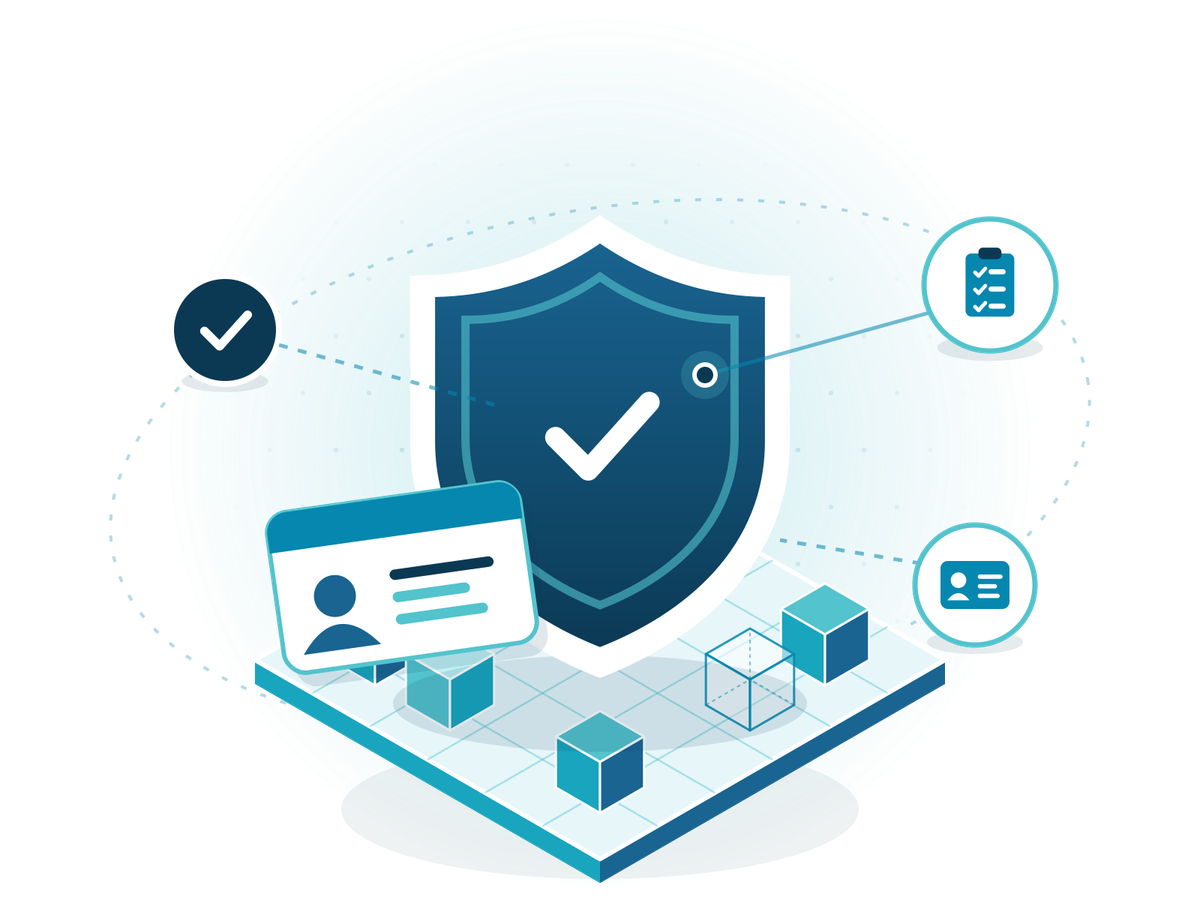
Self-sovereign identity & zk-KYC
Users hold verifiable credentials from trusted issuers in identity wallets aligned with eIDAS 2.0. They can prove statements such as “I am KYC-verified by an EU-regulated entity” without revealing who they are, with support for revocation and cross-platform interoperability.

Privacy-preserving compliance oracles
Decentralised oracle networks check addresses and transactions against sanctions lists and risk data off-chain, returning only a yes/no flag or a risk signal on-chain. AI-supported anomaly detection produces explainable alerts for human review, never automated decisions about individuals.
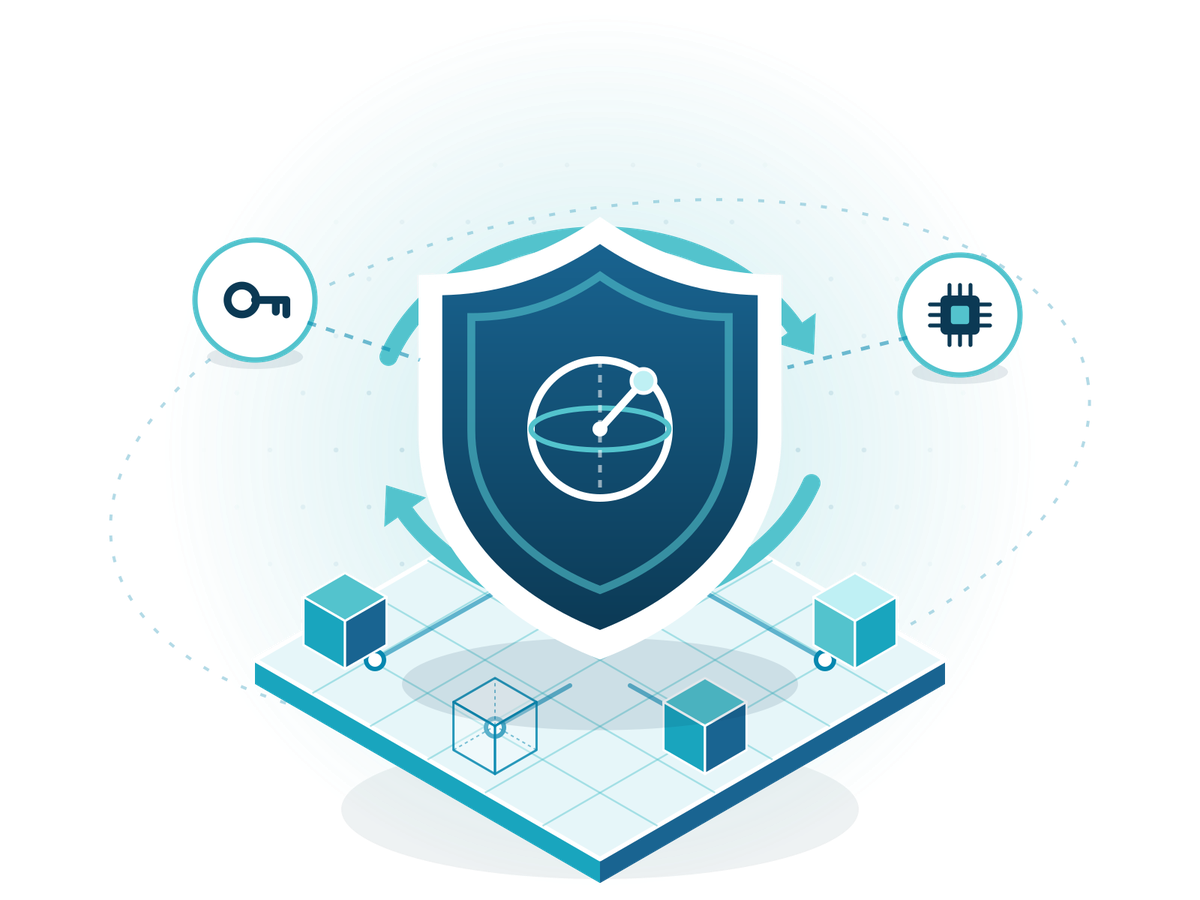
Post-quantum cryptography & crypto-agility
A cryptographic dependency map identifies quantum-exposed components, from wallet signatures to proof systems. Modular interfaces allow algorithms to be swapped with minimal changes, while hybrid classical and post-quantum schemes are benchmarked in parallel.
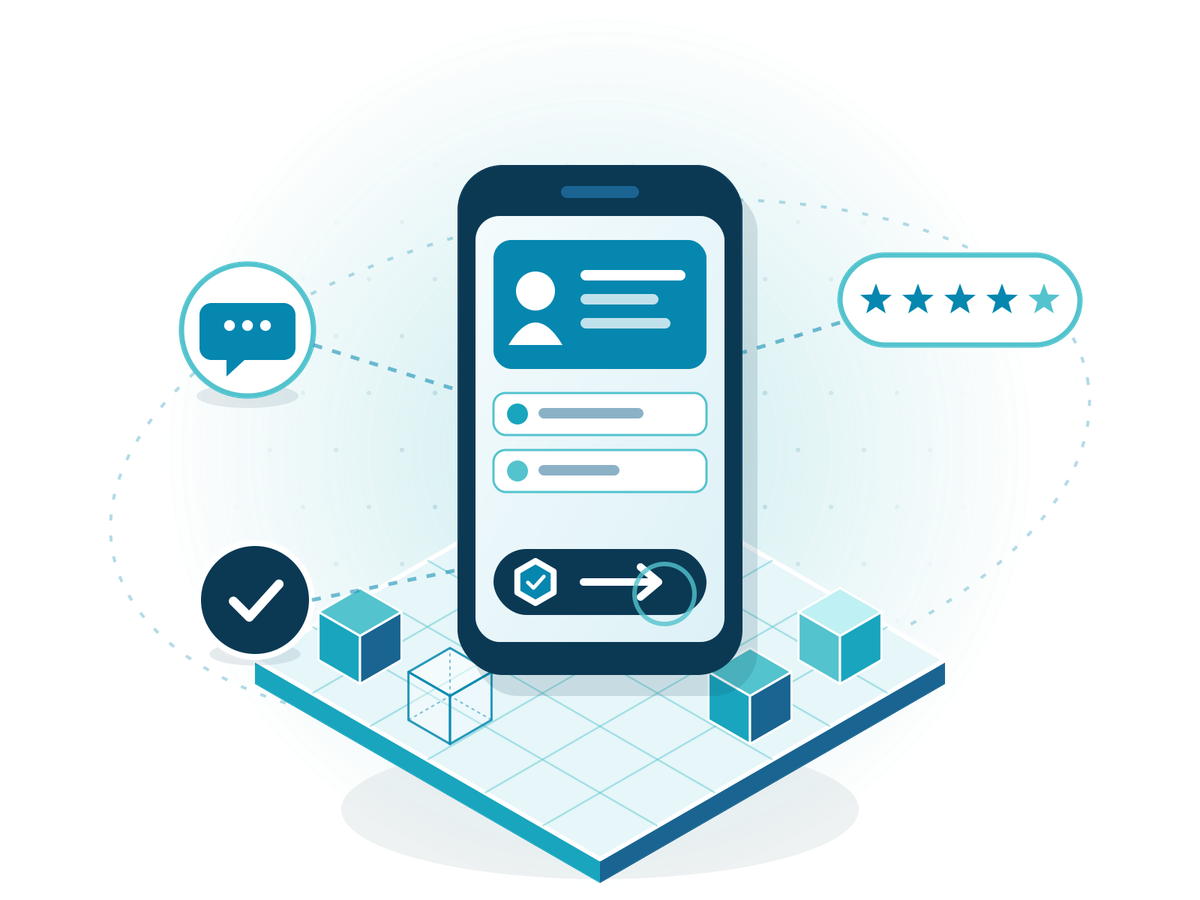
User-centric design & validation
Complex cryptography is turned into simple experiences, such as a one-click “Prove and Transact” action in the wallet. Co-creation workshops and usability testing with retail users, developers and compliance officers shape every release.
Responsible by design
Legal, ethical and data protection safeguards are part of the method, not an afterthought.

No personal data on-chain
Only proofs and minimal signals are recorded, never identities.

GDPR from day one
A Data Protection Impact Assessment and synthetic data in trials until compliance is confirmed.

Human oversight of AI
Explainable alerts, documented models and human reviewers who accept, reject or escalate.

Ethics & Legal Advisory Board
Independent review of testing and deployment plans throughout the project.
Measurable progress over 36 months
TRL 4
Technologies validated in the laboratory at project start
TRL 6
Integrated system demonstrated in a relevant environment
TRL 7
Selected pilots and components in operationally realistic settings
Ten work packages, one integrated plan
The work is organised into ten work packages covering management, research and technology development, pilot validation and dissemination, running in parallel over 36 months.
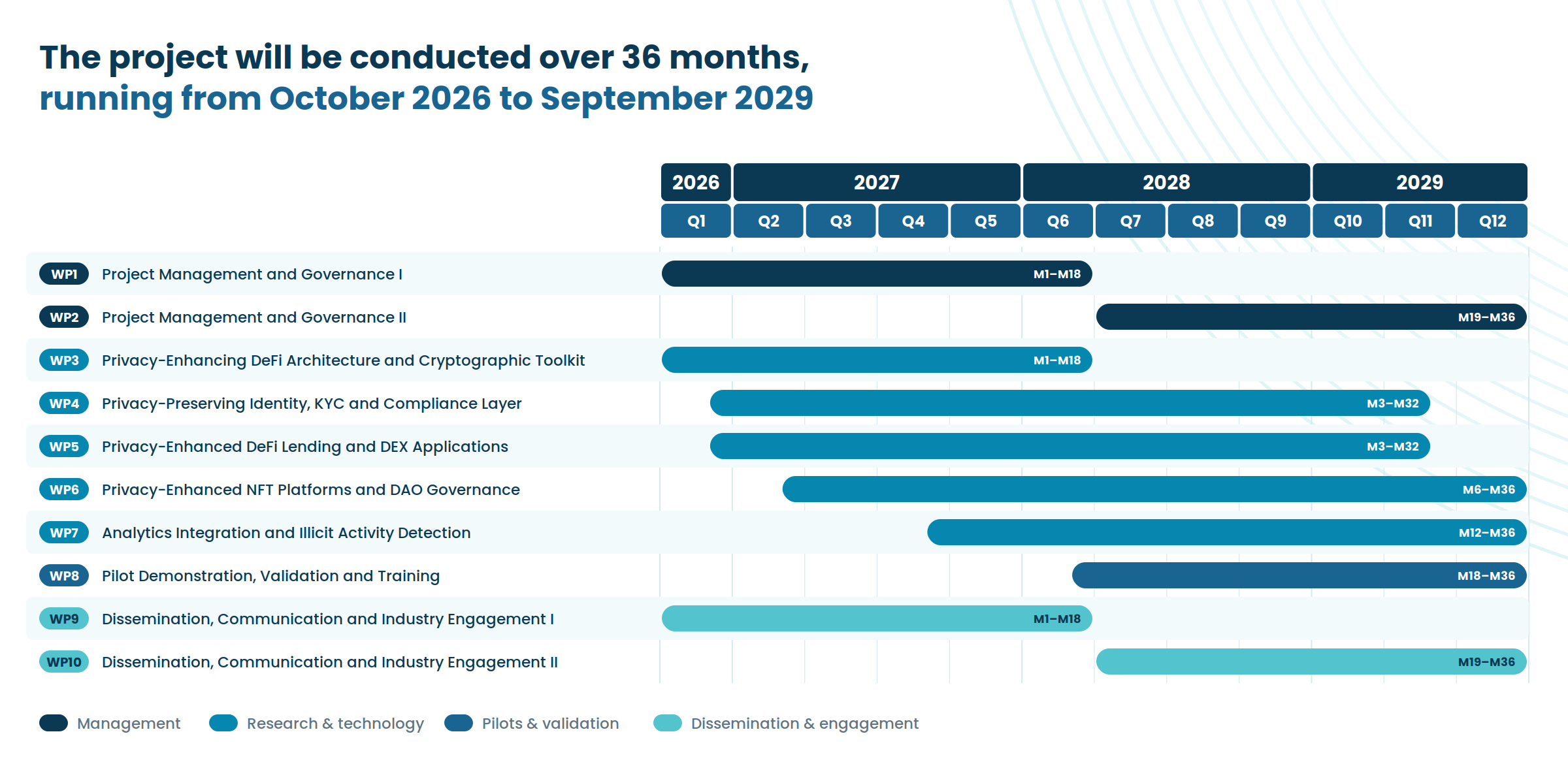
Swipe to see the full timeline →
Meet the people behind PETs4DeFi
17 partners from 11 countries working together on trustworthy digital finance.