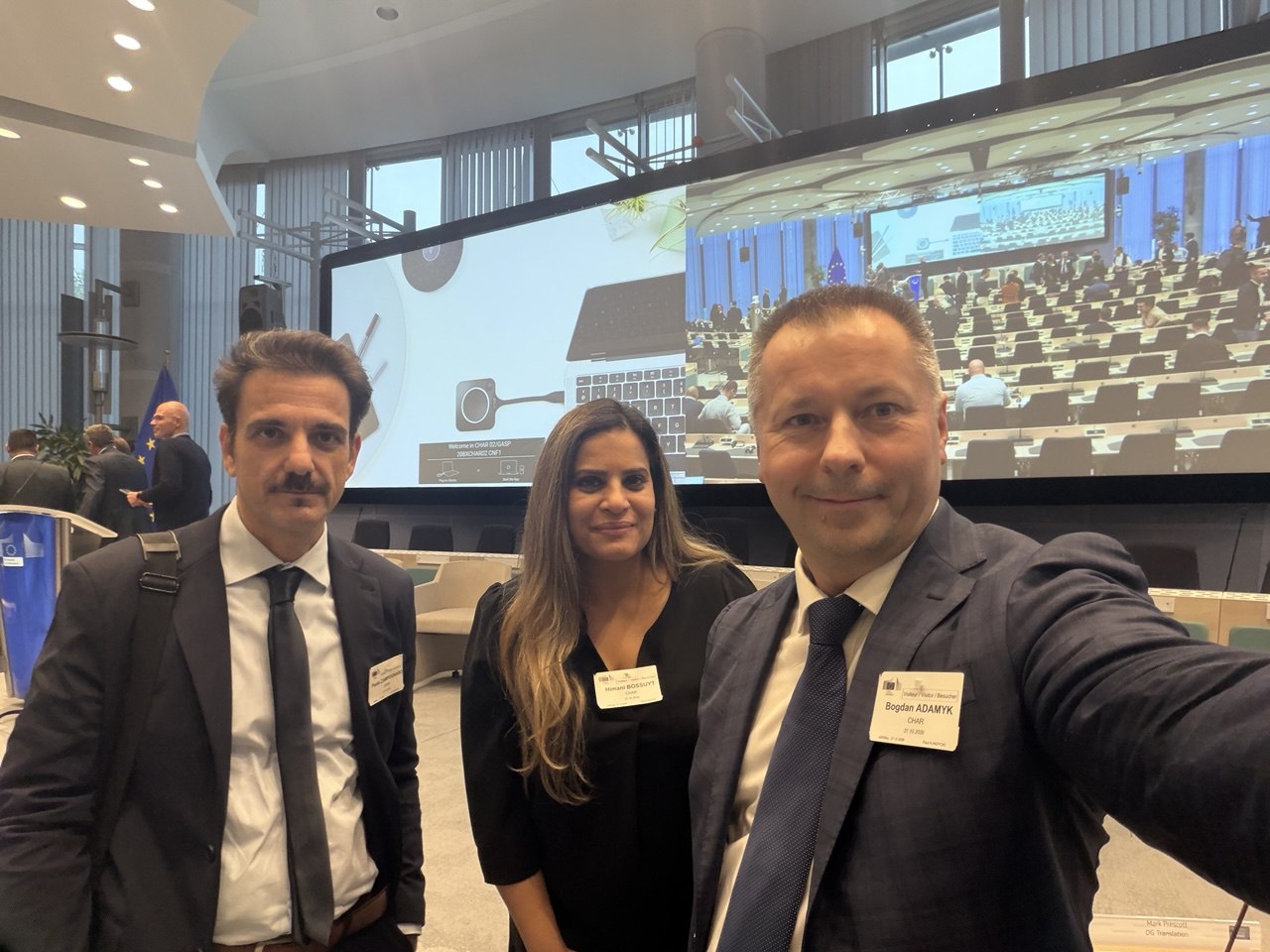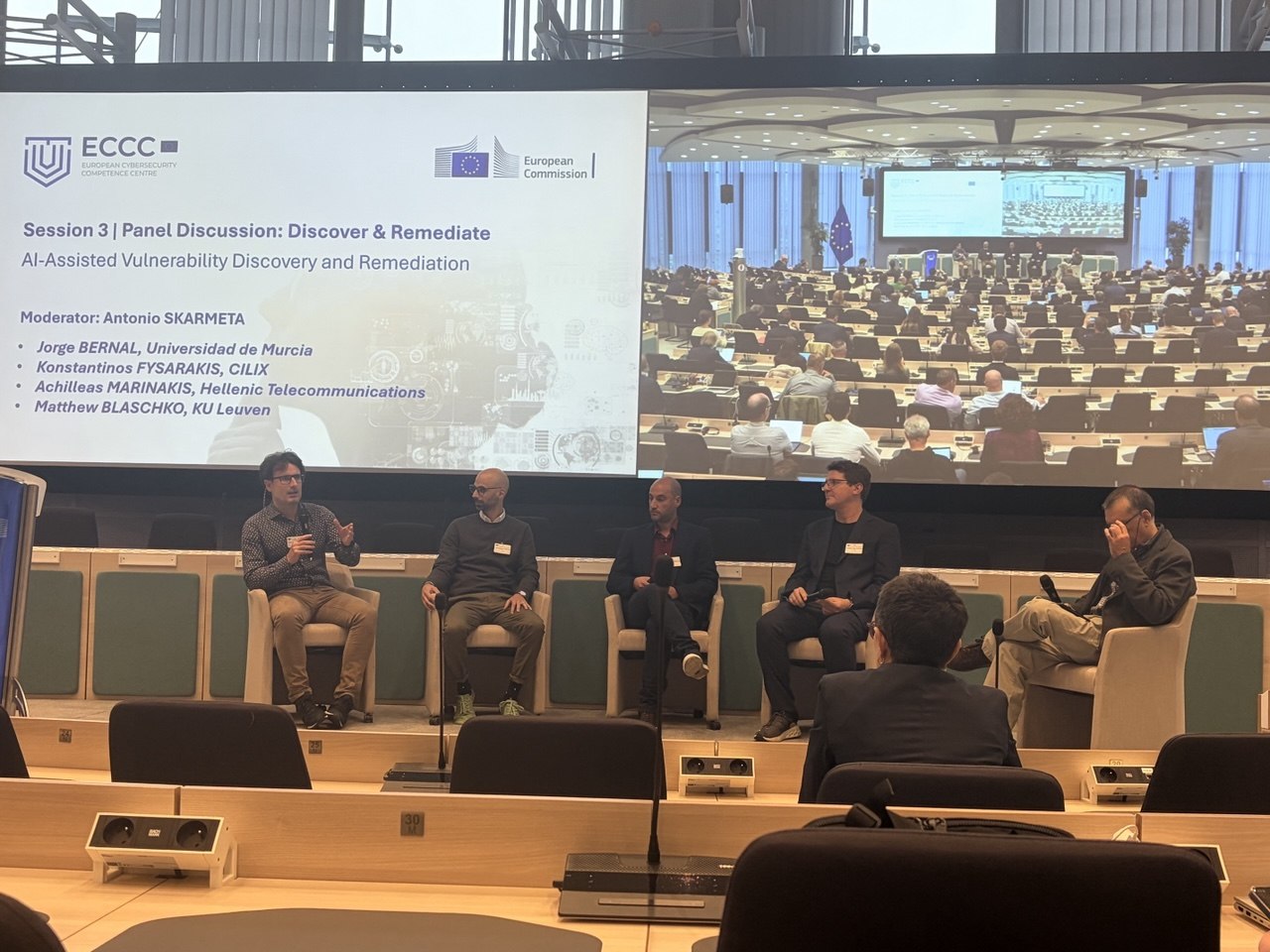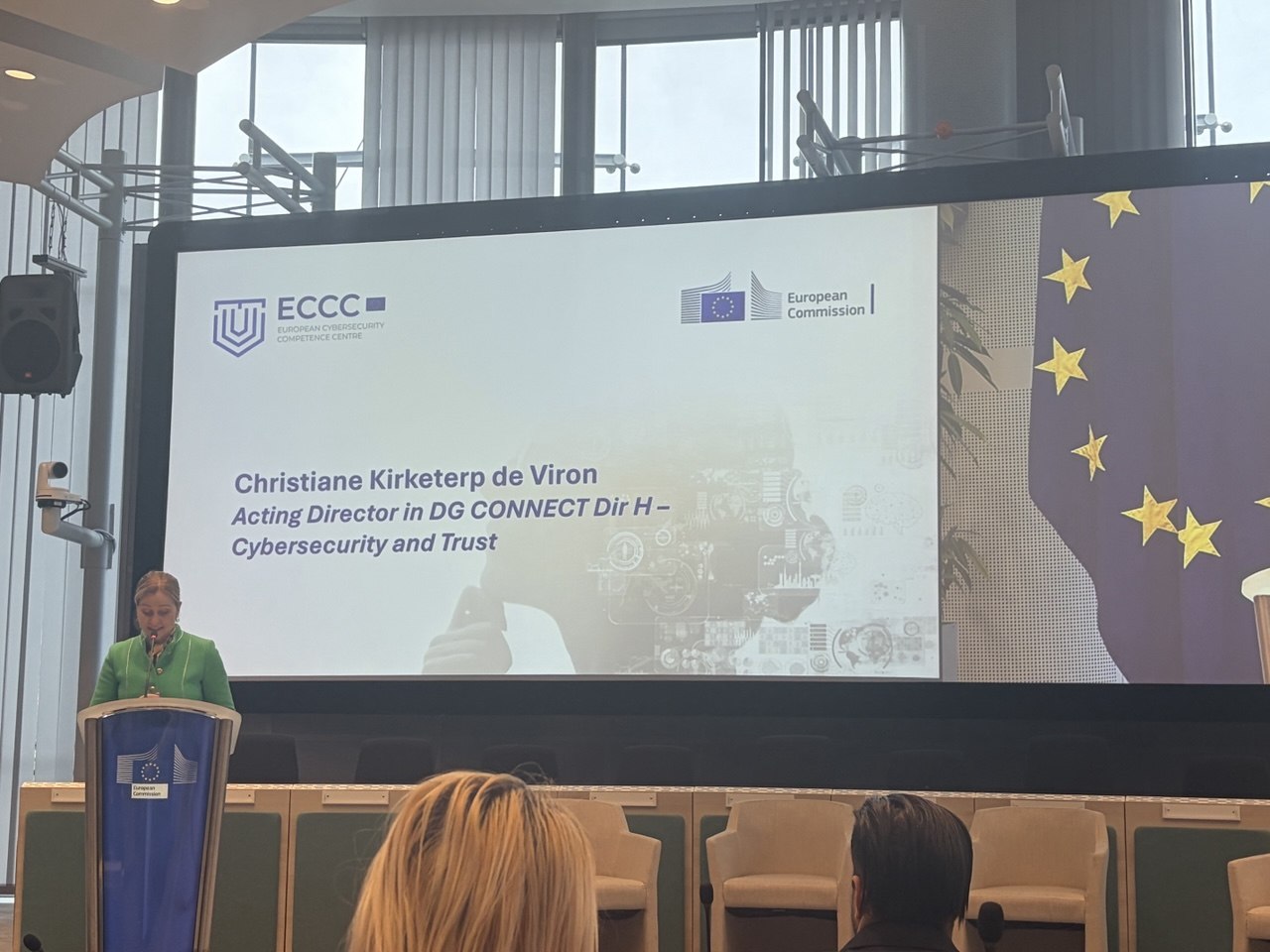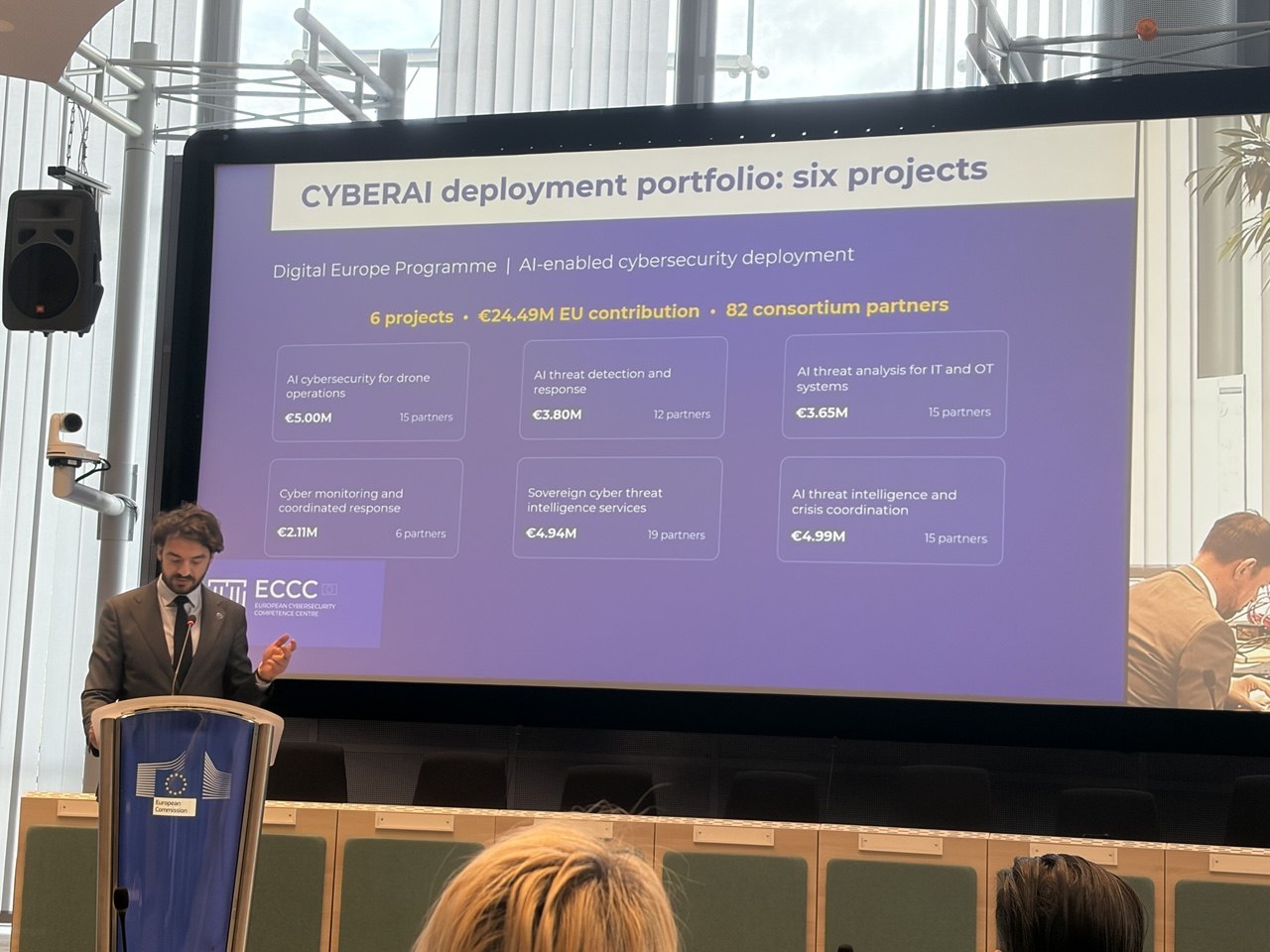
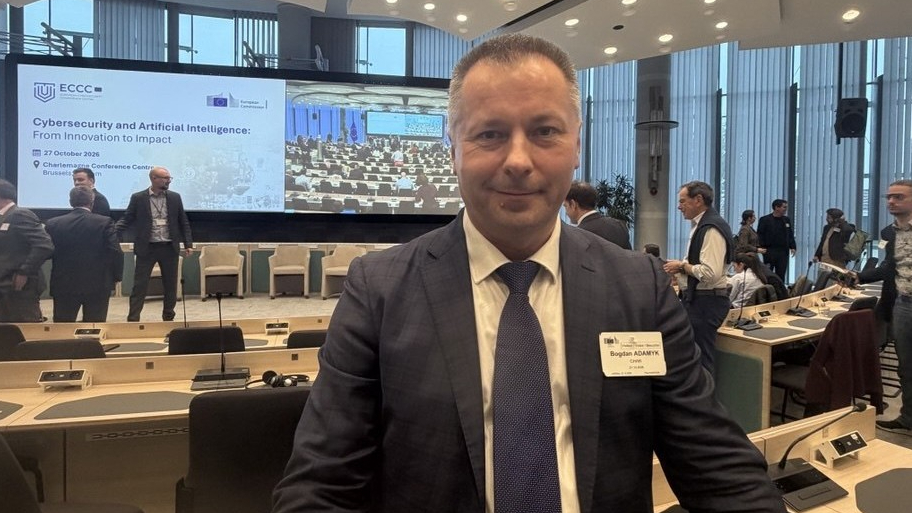
On 27 October 2026, Dr Bogdan Adamyk, Principal Investigator of PETs4DeFi, and Professor Vladlena Benson, Co-Principal Investigator, both from Aston University, took part in the event “Cybersecurity and Artificial Intelligence: From Innovation to Impact” in Brussels. The European Cybersecurity Competence Centre (ECCC) and the European Commission organised it at the Charlemagne Conference Centre.
The event brought together EU-funded projects, industry, researchers, policymakers and public authorities. It looked at how Europe can use AI to strengthen cybersecurity and turn research results into practical tools. The programme included sessions on EU funding for AI in cybersecurity, on building synergies between projects, and on AI-assisted vulnerability discovery and remediation.
One clear message was that funding creates projects, and that synergies help turn them into European capability. The speakers described this as sharing knowledge, connecting research with users, validating solutions in realistic settings and scaling results across Europe.
The event came at the very start of PETs4DeFi, which began on 1 October 2026. It gave us a chance to meet the ECCC, the European Commission and the teams of other ECCC-funded projects, and to start conversations about future collaboration. PETs4DeFi is developing privacy-enhancing technologies that help decentralised finance meet regulatory requirements, so exchange with the wider cybersecurity community is important for our work.
We thank the ECCC and the European Commission for organising the event and for the invitation.
The project funded under Grant Agreement No. 101308999 is supported by the European Cybersecurity Competence Centre.
Co-funded by the European Union. Views and opinions expressed are, however, those of the author(s) only and do not necessarily reflect those of the European Union or the European Cybersecurity Competence Centre. Neither the European Union nor the European Cybersecurity Competence Centre can be held responsible for them.